
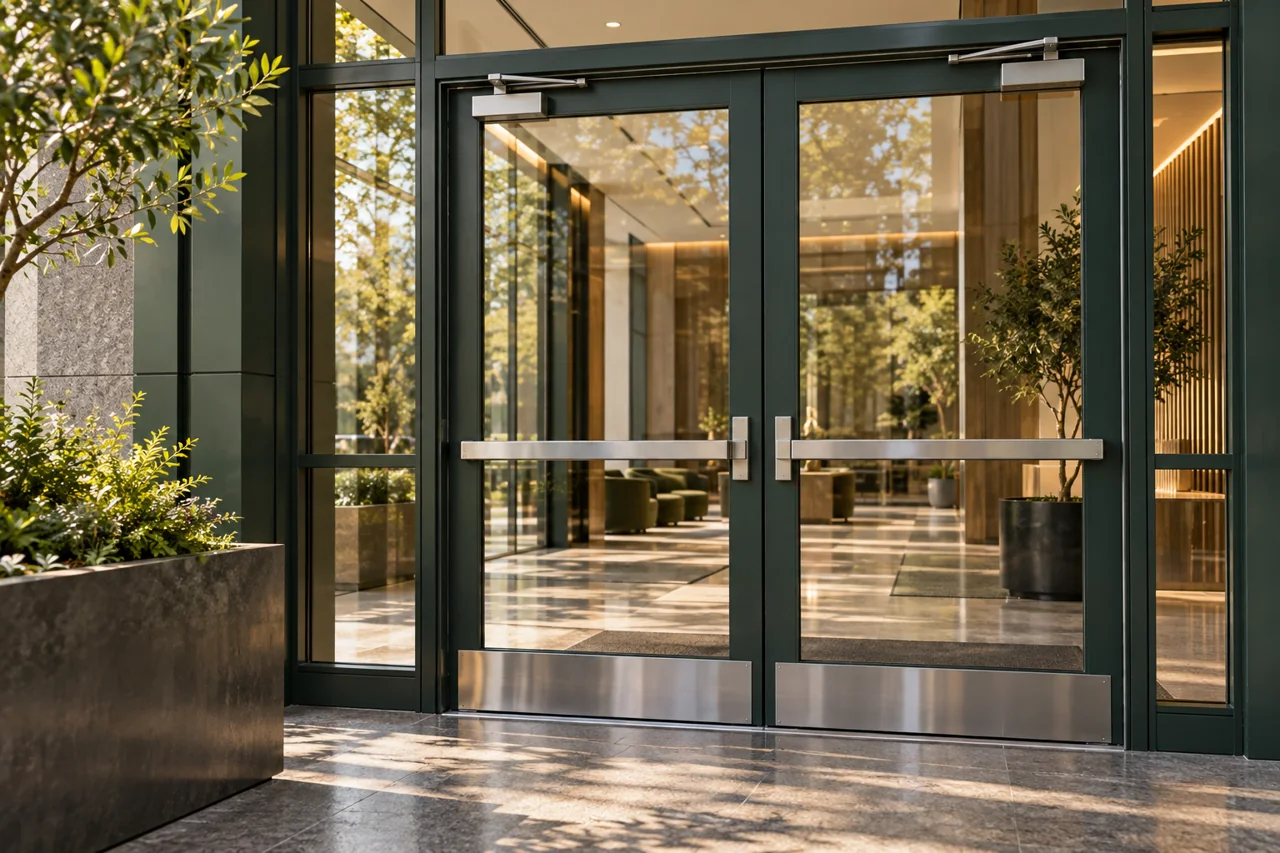
Commercial lockout requests require both a hardware assessment and clear business authorization. An office cylinder, storefront deadlatch and electronic access failure can call for different service scopes.
Identify the opening and the authorized contact
Share the business and property address, entrance location and the person authorized to approve access work. A tenant may need landlord approval for a common entrance or a building-controlled key system. Access authority should be established before work, even when the situation is urgent.
Separate mechanical access from system faults
Describe whether a physical key fails, a credential is rejected or the door itself binds. Reader indicators or a general error description can be useful, but passwords, access codes and sensitive key schedules do not belong in a request. An electrical, network or platform issue may need coordination with the system provider.
Keep business continuity and safe exit in view
Tell us whether the entrance serves employees, customers or a shared corridor. Do not block a required exit as a temporary security measure. After access is restored, discuss the cause and any additional work needed to secure the opening, with an approved scope and purchasing reference where required.
Protect the authorization chain
Identify the company requester, on-site representative and person allowed to approve additional work. A tenant employee may not control a landlord-owned master system or common entrance. Restoring authorized entry should be distinguished from a permanent cylinder or hardware change. Preserve the opening reference and approved scope in the company record so the next shift can understand the outcome.
What to have ready
• Site and entrance identification • Authorized company or property contact • Hardware photos and PO or approval limit