
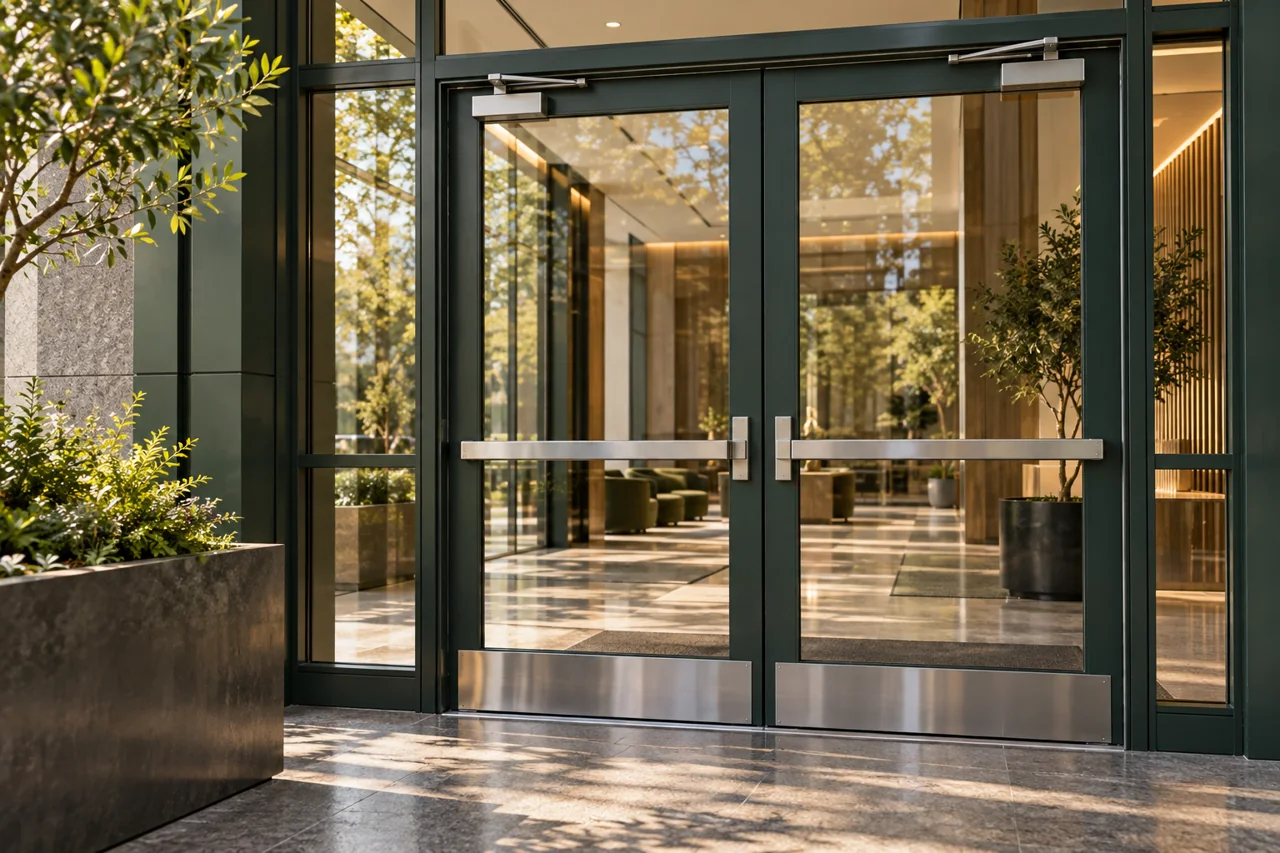
Commercial lock replacement should support the property’s hardware standard, key system and daily traffic. Correct lock function and compatibility matter more than simply finding a product that fits the visible holes.
Identify the existing lock format
Commercial cylindrical locks, mortise locks and narrow-stile products use different preparations. Handing, door thickness, backset and trim clearance affect replacement options. Include the building’s approved hardware schedule and any cylinder restrictions before a product is selected.
Choose the appropriate function
Office, storage, classroom and common-entry uses can require different operation. Explain how users should enter and exit, which side should lock and who controls keys. Electrified locks introduce power and system questions. Fire-rated openings require review of the assembly and applicable listed hardware.
Keep purchasing and completion records together
A useful work order identifies the door, selected hardware, finish, key compatibility and authorized cost. Record approved changes if concealed damage or an unexpected preparation affects the job. After fitting, the opening should be checked for latching, locking and intended release, and the installed product documented for future service.
Keep substitutions accountable
A replacement should be identified by function and suitability, not simply by matching appearance. Record the approved product, cylinder relationship and any required changes to preparation. Confirm who can approve substitutions if the original hardware is unavailable. At closeout, keep the product and opening references with the work record so later maintenance can be based on what was actually installed.
What to have ready
• Door identifier and hardware photos • Approved products or hardware schedule • Key-system requirements and purchasing authority