
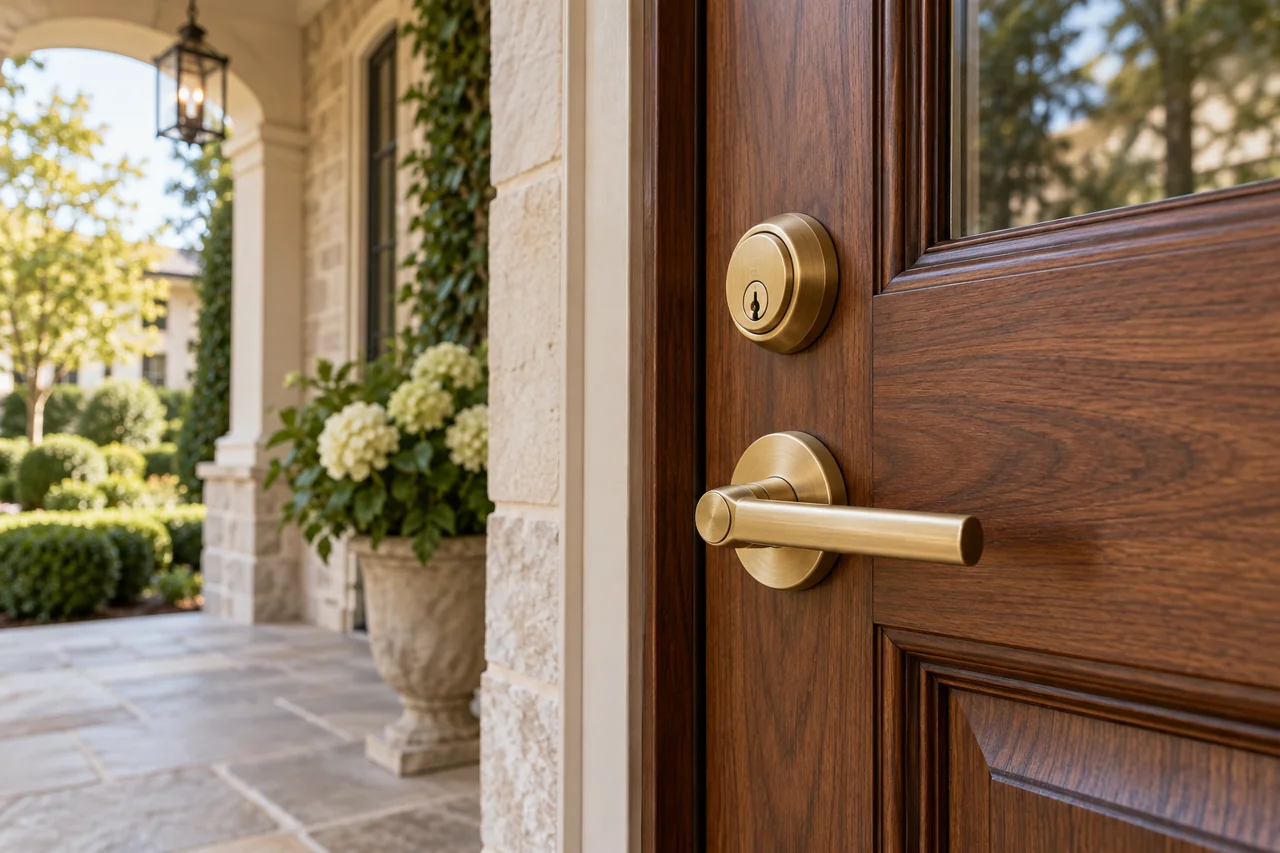
Deadbolt installation is about the complete entrance, not just adding a bolt. Door preparation, frame condition and the way the door must operate determine which hardware is appropriate.
Replacement preparation or a new installation
Replacing an existing deadbolt may reuse suitable holes; adding one where none exists introduces different preparation and clearance questions. Door material, thickness, backset and the position of nearby hardware should be checked before drilling is authorized. A rental, condominium or shared entrance may require written approval.
Give the bolt room to operate
A deadbolt should extend and retract without forcing the door. The relationship between the door and strike is important: binding can make a quality lock frustrating to use and can affect electronic models as well. Frame damage or movement should be identified separately rather than hidden by a new faceplate.
Choose the right everyday function
Discuss who uses the entrance, whether a keyed override is wanted and how someone exits from inside. Glass, fire-rated openings and shared building doors can introduce requirements that need project-specific review. Do not assume that a particular lock function is suitable for every door.
Include usability in the installation decision
Consider who will use the entrance and how inside release must work. Discuss existing preparation, clearances and the intended function before selecting a product. The final review should include ordinary operation with the door open and closed. A published hardware rating describes the product’s tested performance, not a guarantee about the entire door, frame or installation.
What to have ready
• Door material and approximate thickness • Interior, exterior and door-edge photos • Existing holes and any landlord or association requirements