
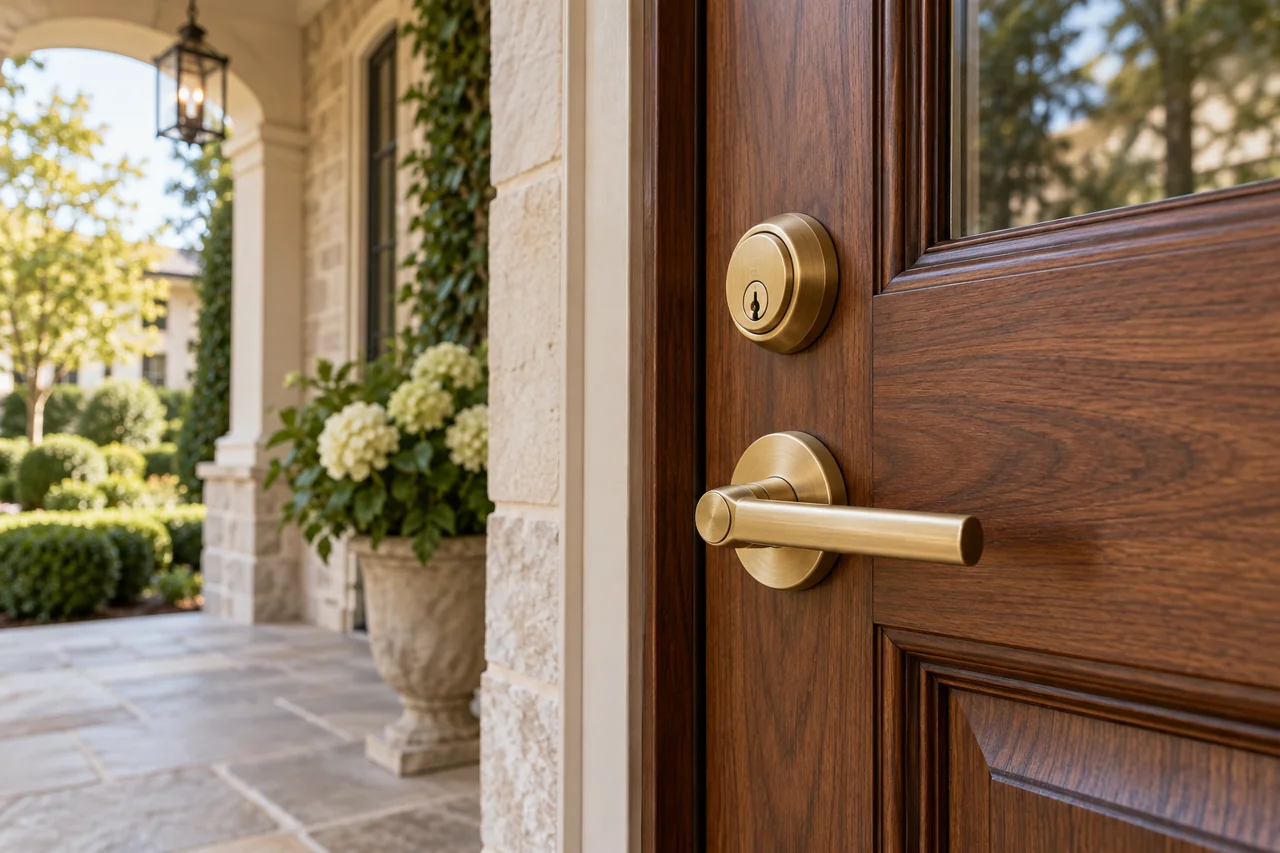
A residential lock replacement should suit the door, the frame and the way you use the entrance. A matching finish matters, but correct fit, reliable latching and everyday usability matter just as much.
Select for the opening
Existing preparation, door thickness, backset, handing and available clearance influence hardware selection. A new lock may not cover the footprint of the old one. Photos of the interior, exterior and door edge help identify potential differences before parts are discussed. Let us know about a screen door or storm door that may restrict handle clearance.
Compare operation as well as appearance
Consider whether the entrance needs a separate deadbolt, a passage handle or an integrated arrangement. Ask about the product’s published performance rating and intended application rather than assuming a heavier-looking lock is automatically better. Cylinder compatibility also affects whether the new lock can share an existing household key.
Inspect the frame and test the result
Replacing hardware without addressing a misaligned strike can leave the original problem in place. The proposed work should identify door or frame damage separately, particularly after a break-in. A completed installation should be checked with the door open and closed for smooth latching, locking and inside release.
Compare a complete replacement scope
A useful estimate identifies the proposed hardware, quantity, finish and installation labor. Ask whether retaining existing trim is possible and whether changes to preparation or strike work are included. Keep a record of the installed model and supplied keys. Product warranty terms and workmanship arrangements should be understood for the particular installation rather than assumed.
What to have ready
• Photos of both sides, the edge and strike • Reason for replacement and any damage • Preferred finish, key compatibility and access needs